
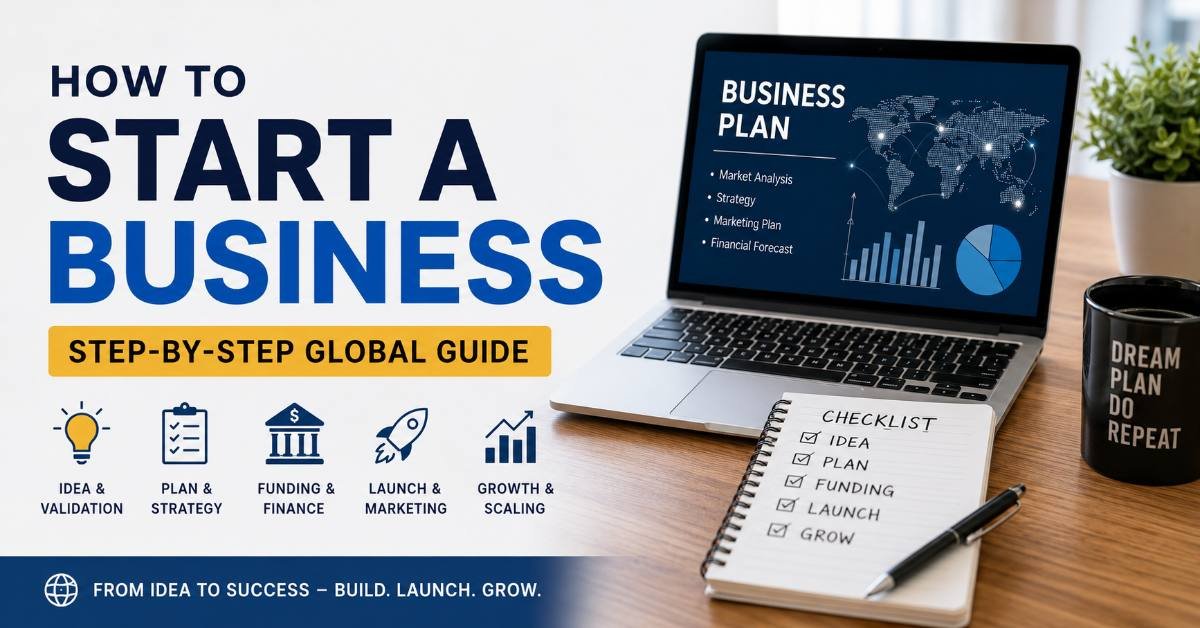
Starting a business is one of the most transformative career decisions you will ever make. It offers personal autonomy, creative freedom, and uncapped financial upside. At the same time, entrepreneurship brings operational hurdles, market uncertainties, and continuous strategic decisions.
Whether you plan to launch a cross-border e-commerce brand, a software-as-a-service (SaaS) platform, a remote consulting firm, or a local service company, the fundamentals of building a sustainable enterprise remain constant worldwide.
This comprehensive guide breaks down the process of starting a successful business from scratch. It provides practical frameworks, actionable steps, operational strategies, and internationally relevant resources to help you turn an idea into a scalable, revenue-generating reality.
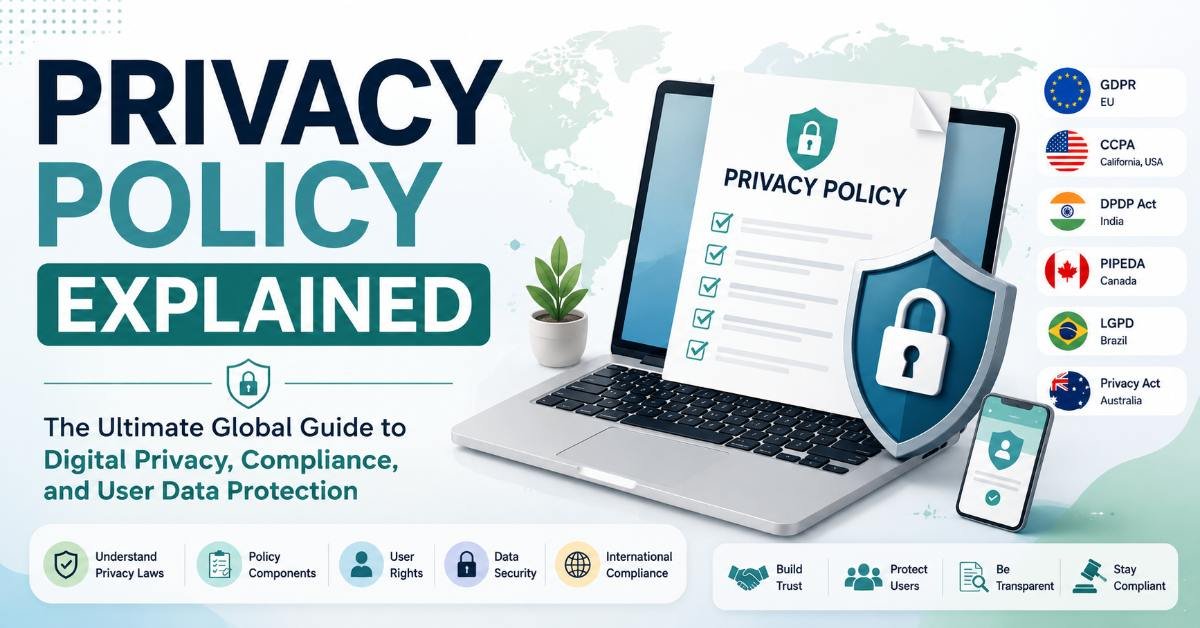
Privacy Policy Explained 2026: Global Guide to Data Privacy & User Rights
1. Finding, Refining, and Validating Your Business Idea
Every enterprise begins with an idea, but an unvalidated idea is merely an assumption. Sustainable businesses are built around solving acute problems for a well-defined group of people willing to pay for a solution.
Identifying Meaningful Market Problems
Successful business concepts generally fall into one of three categories:
- Friction Reducers: Products or services that save customers time, streamline complex workflows, or eliminate everyday stress.
- Economic Enhancers: Solutions that directly help businesses or individuals make money, cut costs, or secure assets.
- Desire Satisfiers: Offers that address status, entertainment, personal development, community, or lifestyle enhancement.
Look at your own domain expertise, daily frustrations, or emerging market gaps. Where are existing solutions failing? What products suffer from poor customer support, outdated technology, or confusing pricing?
Conducting Global Market and Competitor Research
Before spending capital, evaluate whether your market is expanding, stagnant, or shrinking:
- Search Demand: Use tools like Google Trends to assess interest trajectories globally and across target countries.
- Competitor Profiling: Identify 3 to 5 direct competitors and 3 to 5 indirect competitors. Analyze their pricing tiers, customer reviews, feature sets, and social media complaints.
- Target Audience Definition: Build a detailed buyer persona covering demographics (age, location, occupation), psychographics (goals, pain points, values), and buying behavior (budget, decision-making triggers).
Real-World Idea Validation
Never invest life savings into an untested hypothesis. Validate customer demand using low-cost methods:
- Customer Discovery Interviews: Speak with at least 20 target customers. Ask open-ended questions about how they currently solve their problem, what they spend on it, and what frustrates them about existing tools.
- The Smoke-Test Landing Page: Build a simple, clean landing page explaining your upcoming offer with a clear call-to-action (e.g., “Join the Early-Access Waitlist” or “Pre-Order with a 20% Discount”).
- Minimum Viable Product (MVP): Create the simplest functional version of your offer. If you are launching a service, deliver it manually to your first 3 clients before automating workflows or hiring staff.
2. Market Research and Target Audience Profiling
Deep market research allows you to position your brand effectively, set competitive pricing, and acquire customers efficiently.
Primary vs. Secondary Market Research
- Primary Research: Direct, firsthand data collection through surveys, focus groups, user interviews, and product beta testing. This gives you proprietary insights your competitors do not possess.
- Secondary Research: Existing data published by trade associations, statistical agencies (such as the World Bank Open Data), academic studies, and market intelligence reports. This helps you understand overall industry size and macroeconomic trends.
Analyzing Addressable Market Size
Determine whether the financial ceiling of your market justifies your time and investment:
- TAM (Total Addressable Market): The overall global demand for your product category.
- SAM (Serviceable Addressable Market): The portion of the TAM targeted by your specific products or services within your geographical or technological reach.
- SOM (Serviceable Obtainable Market): The realistic percentage of the SAM you can capture within the next 1 to 3 years.
Crafting a Unique Value Proposition (UVP)
Your UVP is the single sentence that answers: Why should someone buy from you instead of your competitors?
- It must clearly state the outcome you deliver.
- It must define who the outcome is for.
- It must highlight what makes your mechanism unique.
Formula: We help [Target Audience] achieve [Specific Desired Result] without [Primary Pain Point/Common Obstacle] through [Unique Mechanism].
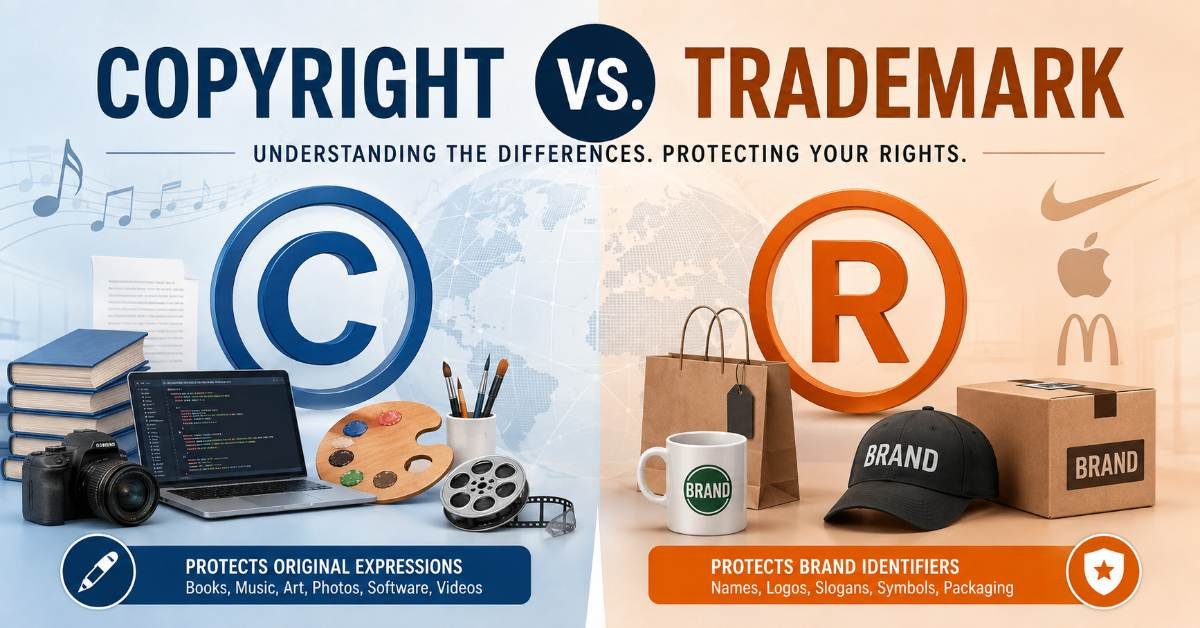
Copyright vs Trademark: Key Differences, Rights & Global Protection
3. Writing a Lean, Actionable Business Plan
Traditional, 50-page business plans are often outdated before the ink dries. Modern founders favor lean business plans that serve as living operational roadmaps.
Essential Components of a Modern Business Plan
Executive Summary
A concise, one-page overview of your business concept, mission, leadership team, primary product or service, target demographic, and high-level financial goals.
Company Description and Value Proposition
An explanation of the specific problem you solve, the industry landscape, and the operational advantages your business holds over alternatives.
Products or Services Line
A detailed breakdown of your core offerings, lifecycle of the product, intellectual property considerations, pricing strategy, and future expansion plans.
Market Analysis and Strategy
Your data-backed summary of industry size, growth trajectory, competitive analysis, and customer segments.
Operational and Management Structure
Who is responsible for daily operations? Detail your organizational structure, key advisory boards, external vendors, and critical software tools needed to deliver your offer.
Marketing and Sales Engine
The exact acquisition channels you will use, your customer acquisition cost (CAC) targets, sales cycle timelines, and retention strategies.
Financial Forecasts
A 3-year projection covering monthly cash flow statements, profit and loss (P&L) statements, and break-even analysis calculations.
4. Selecting the Right Legal Structure and Registration
Your legal business structure directly influences your personal liability, the taxes you pay, the paperwork you file, and your ability to raise investment capital.
Common Business Structures Across Jurisdictions
Sole Proprietorship / Sole Trader
- Overview: The simplest structure where one individual owns and operates the business without creating a separate legal entity.
- Advantages: Minimal setup costs, simple tax reporting (profits pass through to your personal tax return), total operational control.
- Disadvantages: Unlimited personal liability. Your personal assets (home, savings, car) can be seized to pay business debts or legal claims.
General or Limited Liability Partnership
- Overview: A structure where two or more individuals share ownership, management responsibilities, profits, and liabilities.
- Advantages: Shared operational burden, combined capital, straightforward tax structures.
- Disadvantages: Potential for partner disputes; in general partnerships, each partner is liable for the actions of the other.
Limited Liability Company (LLC) / Private Limited Company (Ltd / Pty Ltd)
- Overview: The standard choice for modern small-to-medium businesses worldwide. It creates a distinct legal entity separating the business from its owners.
- Advantages: Protects personal assets from business liabilities; flexible taxation models; credibility with enterprise clients and financial institutions.
- Disadvantages: Higher formation and ongoing compliance costs, annual filing requirements, and regional administrative regulations.
Corporation (C-Corp, S-Corp, PLC, AG)
- Overview: A formal legal structure with shareholders, directors, and officers, designed for businesses intending to scale rapidly, issue stock options, or raise venture capital.
- Advantages: Complete separation of liability, ability to issue multiple share classes, global prestige, perpetual existence.
- Disadvantages: Complex regulatory compliance, expensive formation and legal maintenance, potential for double taxation (in C-Corporations).
Navigating Global Business Registration
- United States: Businesses can register at the state level (such as Delaware or Wyoming for international founders) and secure an Employer Identification Number (EIN) via the Internal Revenue Service (IRS).
- United Kingdom: Companies register directly with Companies House within 24 hours online.
- European Union: Entrepreneurs leverage national registries or cross-border frameworks such as the Your Europe Business Portal.
- International Founders: Non-resident founders often utilize digital formation platforms such as Stripe Atlas to incorporate remotely and open multi-currency commercial accounts.
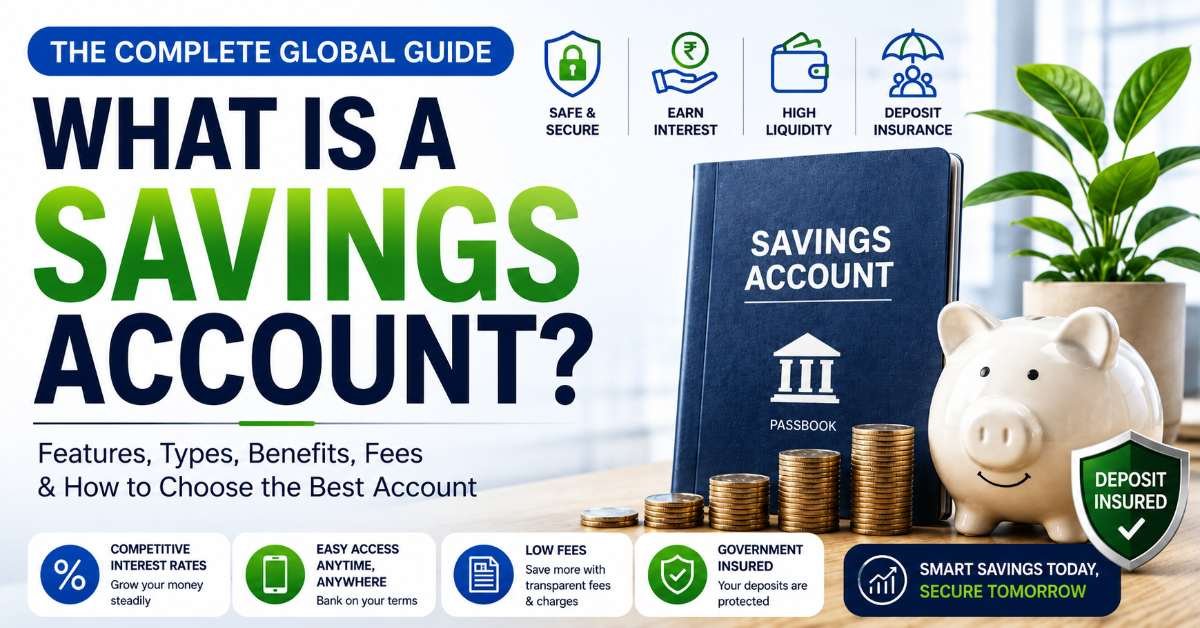
What Is a Savings Account? Types, Benefits, Interest & Fees
5. Financial Management, Budgeting, and Funding
Mismanaged cash flow is the leading cause of early-stage business failure. Sound financial hygiene from day one protects your venture against market downturns.
Estimating Startup Costs
Categorize your launch budget into three core buckets:
- Fixed Capital Expenditures (CapEx): One-off foundational purchases such as equipment, website development, brand identity design, domain acquisitions, and legal incorporation fees.
- Recurring Operating Expenses (OpEx): Monthly costs required to keep the doors open, including software subscriptions, web hosting, office space, insurance, and contractor retainers.
- Working Capital Reserve: A cash buffer equal to at least 6 months of operational expenses to support the business before it reaches organic cash flow positivity.
Global Funding Strategies
Bootstrapping (Self-Funding)
- How It Works: Funding the business entirely using personal savings, early customer revenues, or sweat equity.
- Best For: Service agencies, digital product creators, consultancies, and lean e-commerce brands.
- Trade-off: Slower growth speed in exchange for retaining 100% equity and total decision-making autonomy.
Debt Financing and Small Business Loans
- How It Works: Borrowing capital from commercial banks, online alternative lenders, or government programs that must be repaid with interest.
- Best For: Businesses with predictable cash flows, physical inventory needs, or tangible equipment assets.
- Trade-off: Obligation to make regular monthly payments regardless of whether the business is profitable.
Angel Investors and Venture Capital (VC)
- How It Works: Exchanging equity (ownership shares) or convertible debt notes for growth capital from high-net-worth individuals or institutional funds.
- Best For: High-growth technology startups with large addressable markets seeking rapid global scale.
- Trade-off: Significant dilution of ownership, high pressure for rapid returns, and loss of unilateral operational control.
Crowdfunding
- How It Works: Raising small amounts of capital from a large pool of people, typically online via reward-based platforms or equity crowdfunding portals.
- Best For: Novel consumer hardware, design products, creative projects, or mission-driven consumer goods with strong community appeal.
Separating Personal and Business Finances
- Open a Dedicated Commercial Bank Account: Never mix personal and business funds. Use modern platforms such as Wise or Revolut Business for low-cost international transfers and multi-currency accounts.
- Adopt Cloud Accounting: Integrate tools like QuickBooks, Xero, or Wave to log expenses, automate invoicing, track accounts receivable, and generate accurate financial statements.
- Build an Emergency Tax Reserve: Automatically set aside 20% to 30% of gross revenues into a secondary savings account to cover quarterly tax liabilities.
6. Securing Licenses, Permits, and Global Compliance
Operating legally prevents costly government fines, product seizures, or forced business closures.
Essential Legal Foundations
Business Licenses and Operational Permits
Depending on your industry and location, you may require specific operating approvals:
- General business operations license.
- Health, safety, and sanitation inspections (food, hospitality, wellness).
- Professional occupational licenses (accounting, legal, healthcare, engineering).
- Import/export customs registrations for cross-border physical products.
Intellectual Property Protection
Protect your brand identity and proprietary assets:
- Trademarks: Protect your company name, brand slogan, and logo through agencies such as the World Intellectual Property Organization (WIPO).
- Copyrights: Secure legal ownership over written content, software code, visual media, and proprietary curriculum.
- Patents: Protect novel inventions, physical engineering solutions, and unique mechanical processes.
Data Privacy and Consumer Protection
Modern digital businesses must adhere to international privacy frameworks regardless of where the founder resides:
- GDPR (General Data Protection Regulation): Mandatory for any business processing the personal data of European Union residents.
- CCPA / CPRA: California’s consumer data privacy regulations.
- Implement clear Privacy Policies, Terms of Service, Cookie Consent banners, and secure SSL/TLS data encryption on your web properties.
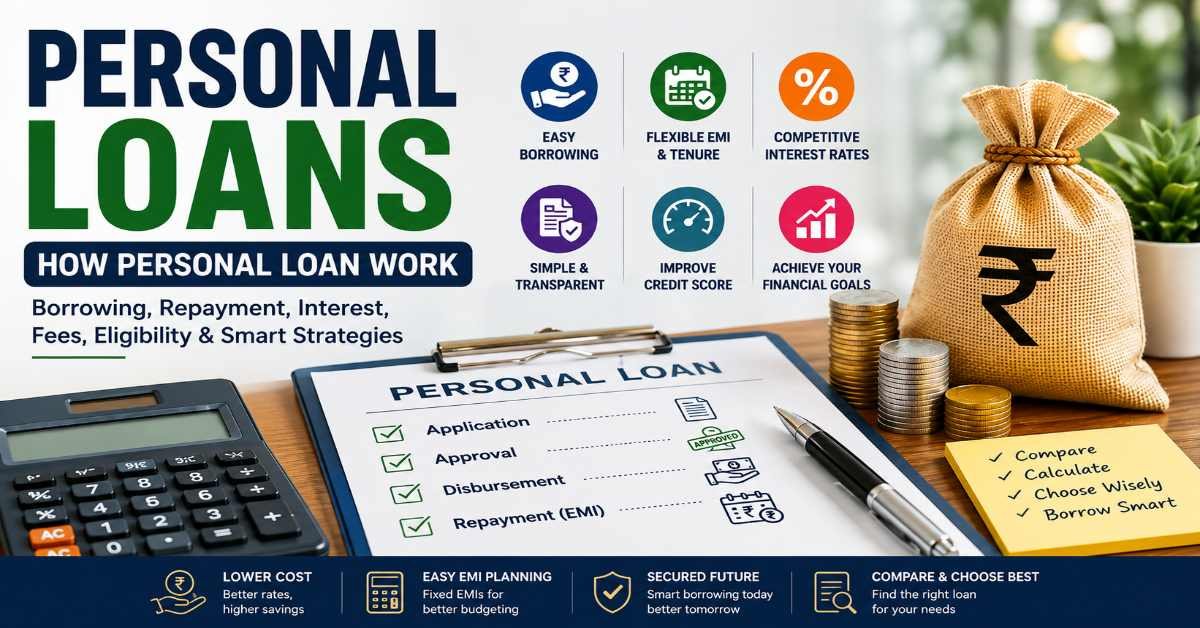
How Personal Loans Work: Interest, EMI, Fees & Repayment Guide
7. Developing Your Product or Service
Your business cannot out-market a fundamentally poor product. Focus on delivering an exceptional customer experience.
Building Physical Products
- Prototyping: Build functional models to test design integrity, ergonomics, and material strength.
- Sourcing and Manufacturing: Find vetted suppliers through international directories like Alibaba or ThomasNet. Request sample batches before committing to full production runs.
- Quality Assurance (QA): Establish rigorous inspection criteria to check goods at the factory level before international freight dispatch.
Developing Digital Products and Software
- Agile Sprints: Build in short, iterative 2-week development cycles. Release functional modules, gather user feedback, and refine.
- User Experience (UX) Architecture: Keep workflows simple. Minimize the clicks needed for a user to achieve their core objective.
- Scalable Cloud Infrastructure: Host your application on reliable cloud platforms like AWS, Google Cloud, or Microsoft Azure to ensure high uptime and security.
Packaging High-Ticket Services and Consulting
- Productized Services: Move away from open-ended hourly billing. Package your expertise into defined deliverables with clear scopes, timelines, and flat-rate pricing.
- Standard Operating Procedures (SOPs): Document every operational task (client onboarding, project delivery, reporting) so team members can execute work consistently.
8. Brand Identity, Design, and Online Presence
Your brand is the emotional and intellectual perception customers hold about your company. A credible brand builds trust and commands premium pricing.
Brand Identity Essentials
- Brand Name: Choose a name that is memorable, easy to pronounce, easy to spell, and has an available top-level domain (.com or relevant ccTLD).
- Visual Identity System: Select a cohesive color palette (primary, secondary, and accent colors), legible typography (header and body fonts), and clean logo variations.
- Brand Voice and Tone: Establish guidelines for how your company communicates across email, social media, sales calls, and customer support.
Building a Modern, Fast Website
Your website is your primary 24/7 digital storefront. Prioritize functionality, speed, and mobile responsiveness:
- Content Management Systems (CMS): Build on versatile platforms such as WordPress, Shopify (for e-commerce), Webflow, or Framer.
- Mobile-First Design: Ensure your layouts adapt to smartphones and tablets, as mobile traffic accounts for more than half of global web browsing.
- Conversion Rate Optimization (CRO): Place clear, high-contrast call-to-action buttons above the fold. Use social proof, client logos, secure payment badges, and concise copy to guide visitors toward buying.
How to Create a Budget: 10 Simple Steps to Take Control of Your Money
9. Sales, Marketing, and Customer Acquisition
A great product without distribution will fail. Build a diversified, repeatable customer acquisition engine tailored to your business model.
High-Impact Marketing Channels
Search Engine Optimization (SEO)
Create high-value, educational, and search-optimized content that answers your audience’s questions. Focus on:
- Search Intent: Align your content with what users are looking for (informational, commercial, or transactional queries).
- On-Page SEO: Optimize title tags, meta descriptions, internal link structures, and image alt text.
- Technical SEO: Keep load times fast, eliminate broken links, and maintain clean site architecture.
Performance Advertising (Paid Media)
Acquire targeted traffic quickly using paid advertising networks:
- Search Ads (Google Ads, Bing Ads): Capture high-intent users actively searching for immediate solutions.
- Social Ads (Meta, LinkedIn, TikTok, YouTube): Generate awareness by targeting specific interests, job titles, and lookalike audiences.
- Tracking and Attribution: Install tracking pixels and conversion APIs correctly to measure return on ad spend (ROAS).
Organic Social Media and Community Building
- Choose 1 or 2 platforms where your core buyers spend their time (e.g., LinkedIn for B2B; Instagram and TikTok for B2C; X for tech/finance).
- Share practical insights, behind-the-scenes build processes, case studies, and industry analyses rather than just direct sales pitches.
Email Marketing and Lifecycle Automation
- Email is an asset you own outright, independent of social media algorithms.
- Capture email addresses using lead magnets (templates, whitepapers, discounts, free trials).
- Build automated email flows: Welcome Sequences, Abandoned Cart Reminders, Post-Purchase Check-ins, and Re-engagement Campaigns.
Strategic Partnerships and Cold Outreach
- B2B Outreach: Identify key decision-makers on LinkedIn, find their verified business email addresses, and send personalized, value-focused messages proposing a conversation.
- Co-Marketing Partnerships: Team up with non-competing businesses that serve the same target audience to host joint webinars, cross-promote newsletters, or bundle products.
10. Operations, Hiring, and Scaling
Transitioning from a solo founder to an enterprise leader requires setting up reliable systems, delegating tasks, and maintaining continuous quality control.
Building Core Operational Systems
- Project Management: Organize team tasks and project milestones using platforms like Asana, ClickUp, Trello, or Notion.
- Internal Communication: Reduce unnecessary meetings with centralized communication tools like Slack, Microsoft Teams, or Loom.
- Customer Support Desk: Manage incoming inquiries systematically with tools like Zendesk, Help Scout, or Intercom.
Hiring: Contractors vs. Full-Time Employees
- Freelancers and Contractors: Ideal for specialized, project-based tasks (e.g., brand design, technical development, legal drafting) or fluctuating workloads. Source talent globally via platforms like Upwork or Fiverr.
- Full-Time Team Members: Bring on full-time employees for core business functions that require deep domain knowledge, company alignment, and long-term dedication.
- Global Payroll and Compliance: When hiring remote employees worldwide, use Employer of Record (EOR) services like Deel or Remote to stay compliant with local labor laws, benefits, and tax withholding.
Tracking Key Performance Indicators (KPIs)
Keep a close eye on the metrics that matter most to long-term health:
- Customer Acquisition Cost (CAC): Total sales and marketing spend divided by the number of new customers acquired.
- Lifetime Value (LTV): The total net revenue a single customer generates throughout their relationship with your business. Aim for an LTV to CAC ratio of at least 3:1.
- Monthly Recurring Revenue (MRR) / Annual Run Rate (ARR): The predictable revenue stream generated by subscriptions or recurring retainers.
- Churn Rate: The percentage of customers or subscribers who cancel their service over a given time window.
- Net Burn Rate: The monthly speed at which your cash reserves decrease before reaching profitability.
What Is Investing? A Complete Guide to Building Wealth in 2026
11. 10 Common Mistakes That Derail Early-Stage Startups
Learning from common pitfalls helps you avoid costly errors during your launch phase:
- Building Without Validation: Spending months developing a product without speaking to real customers or testing market demand.
- Ignoring Cash Flow Margins: Confusing gross revenue with net profit and running out of operating runway.
- Underpricing Offers: Setting prices too low out of fear, resulting in slim profit margins that cannot support paid advertising or quality hires.
- Poor Co-Founder Alignment: Failing to sign clear founders’ agreements covering equity vesting schedules, roles, and exit terms.
- Chasing Shiny Objects: Constantly changing products, marketing channels, or strategies before giving any single approach enough time to work.
- Neglecting Legal Basics: Skipping formal incorporation, failing to secure trademarks, or using non-compliant data collection practices.
- Over-Hiring Too Early: Adding full-time staff and fixed overhead before proving a repeatable sales model.
- Underestimating Customer Acquisition Difficulty: Assuming that simply building a great product will cause customers to show up on their own.
- Failing to Delegate: Founders trying to do everything themselves, creating operational bottlenecks that stall business growth.
- Ignoring Retention and Feedback: Focusing entirely on winning new customers while ignoring the needs and complaints of existing ones.
12. Complete 90-Day Actionable Business Launch Checklist
Use this 90-day phased plan to move methodically from concept to a live, operational business.
Phase 1: Days 1 to 30 — Discovery, Validation, and Planning
- Pinpoint a clear market problem and draft your Unique Value Proposition.
- Perform competitor benchmarking and profile your target audience personas.
- Run 20 customer discovery interviews and launch a smoke-test landing page to validate demand.
- Complete a lean business plan covering your unit economics, operational tools, and revenue goals.
- Choose a memorable business name and secure the primary domain name and social media handles.
Phase 2: Days 31 to 60 — Legal Setup, Infrastructure, and Product Build
- Choose your legal business structure (Sole Proprietorship, LLC, Ltd, Corporation).
- File formal business registration documents with your national or regional corporate registry.
- Secure your tax identification numbers (e.g., EIN, VAT, GST).
- Open a dedicated commercial bank account and connect automated accounting software.
- Build your Minimum Viable Product (MVP) or finalize your core service packages.
- Draft standard client contracts, terms of service, and privacy policies.
Phase 3: Days 61 to 90 — Branding, Platform Setup, and Initial Launch
- Finalize your visual brand assets (logo, brand colors, typography).
- Design and launch a mobile-responsive, fast-loading website with integrated analytics.
- Set up your conversion tracking, email marketing automations, and CRM pipelines.
- Reach out to your initial target audience via cold outreach, content marketing, or direct networks.
- Onboard your first 3 to 10 paying customers and run structured feedback loops.
- Review your initial 90-day financial metrics, refine your sales processes, and plan your next growth phase.
The Path Forward
Starting a business is not a single, isolated event; it is an ongoing process of testing, learning, and adapting. Economic conditions will change, customer preferences will evolve, and new competitors will enter your market.
Founders who build durable, profitable enterprises are not necessarily the ones with the flashiest initial ideas. They are the operators who validate demand with data, manage cash flow carefully, deliver consistent value to their clients, and solve problems persistently over time.
Focus on your target market, solve real problems, build straightforward systems, and take consistent action on your business goals every day.


1 thought on “How to Start a Business in 2026: Step-by-Step Guide”
Comments are closed.