Intellectual property is one of the most valuable assets any creator, entrepreneur, or global business can own. When you launch a brand, write a piece of software, design a logo, record music, or publish written content, you are creating intangible property that requires legal protection.
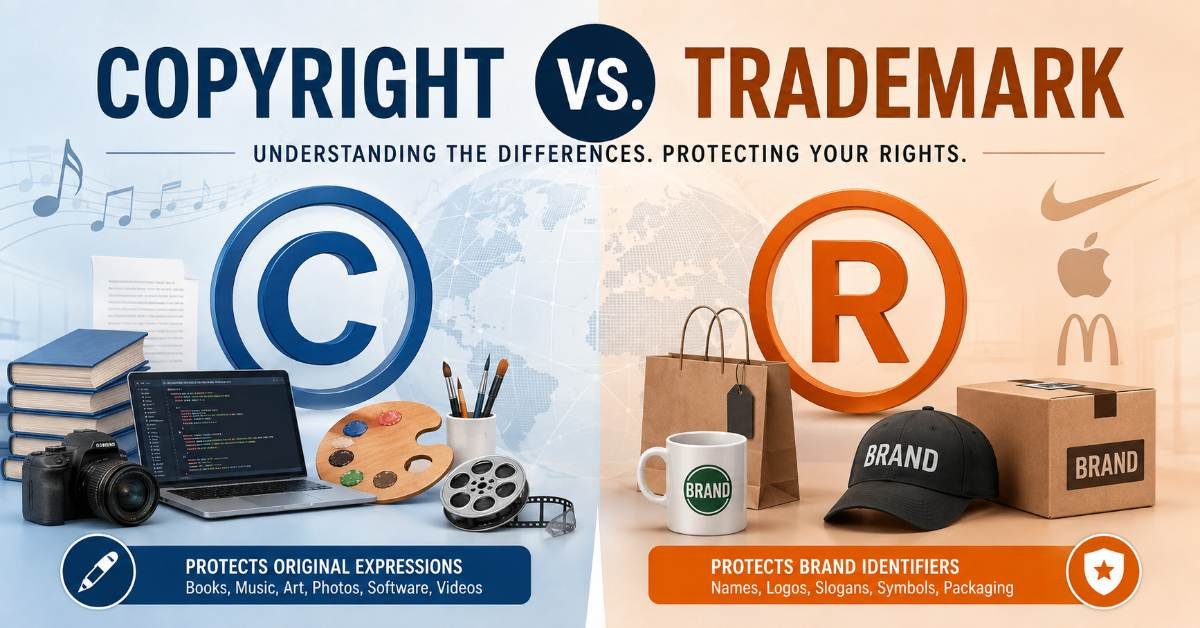
Two of the most frequently confused legal concepts in international commerce are Copyright vs Trademark. While both grant exclusive legal rights and prevent unauthorized exploitation, they protect fundamentally different types of assets, serve distinct commercial purposes, and operate under different international treaties and filing systems.
Understanding the clear differences between copyright and trademark protection is critical to safeguarding your business reputation, avoiding costly legal infringement disputes, and building long-term asset value worldwide.

1. What Is a Copyright?
A copyright is a legal right granted to the creator of an original work of authorship fixed in a tangible medium of expression. Copyright law protects the expression of an idea, not the idea itself.
Under international agreements such as the Berne Convention, copyright protection arises automatically the moment an author fixes an original work in a physical or digital format (e.g., writing words on paper, saving a digital illustration, or recording audio).
Key Characteristics of Copyright Protection
- Automatic Creation: In most jurisdictions worldwide, you do not need to register a work formally to own its copyright. The right exists upon creation.
- Scope of Protection: It grants the author the exclusive right to reproduce, distribute, display, perform, and create derivative works from the original content.
- Target Asset: Creative, artistic, literary, dramatic, musical, and software expressions.
Real-World Examples of Copyrightable Assets
- Literary works: Books, blog posts, whitepapers, technical documentation, poetry, and scripts.
- Visual arts: Paintings, digital illustrations, photographs, graphic designs, blueprints, and architectural layouts.
- Digital assets: Website source code, database structures, app user interface graphics, and video game software.
- Media and entertainment: Recorded songs, musical compositions, sound effects, podcasts, films, animations, and video content.
2. What Is a Trademark?
A trademark is a distinctive sign, design, phrase, symbol, word, or combination thereof used by an individual or enterprise to identify and distinguish its goods or services from those of competitors in the marketplace.
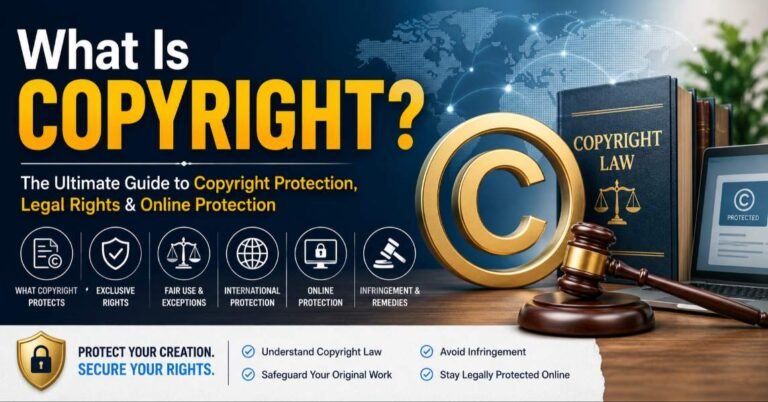
The primary legal purpose of a trademark is source identification and consumer protection. It guarantees to consumers that goods or services bearing a specific mark originate from a known, trusted business source, thereby preventing deception and counterfeit trade.
Key Characteristics of Trademark Protection
- Commercial Use Requirement: Trademark rights are tied directly to active use in commerce. In many jurisdictions (like the United States), trademark priority relies heavily on “first to use in commerce,” whereas in others (such as China or the European Union), priority leans toward “first to file.”
- Scope of Protection: It grants exclusive rights to use the mark within specific commercial classes of goods or services, preventing competitors from using confusingly similar marks.
- Target Asset: Brand identifiers, company names, product labels, slogans, logos, and packaging elements.
Real-World Examples of Trademarkable Assets
- Brand Names: Nike, Apple, Google, Microsoft, Sony, Samsung.
- Catchphrases and Slogans: “Just Do It”, “Think Different”, “I’m Lovin’ It”.
- Visual Identifiers: The Nike Swoosh, the McDonald’s Golden Arches, the Twitter/X bird or glyph.
- Non-Traditional Marks: Sound marks (the Netflix “ta-dum” sonic branding), color marks (Tiffany Blue, Christian Louboutin red soles), and distinct product packaging/trade dress (the classic Coca-Cola contoured glass bottle).
How Personal Loans Work: Interest, EMI, Fees & Repayment Guide
3. Copyright vs Trademark: Detailed Point-by-Point Comparison
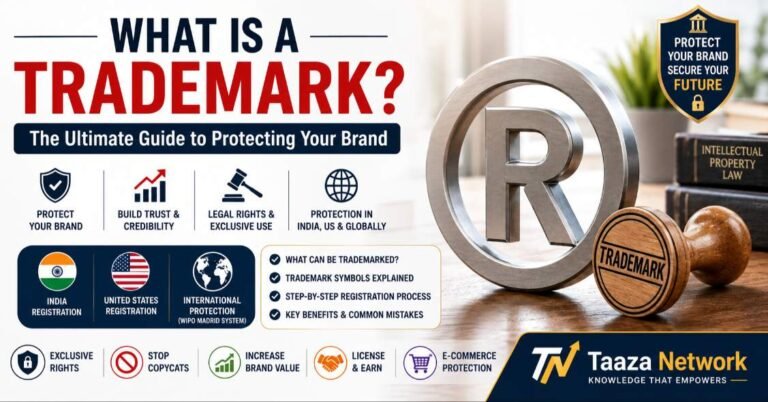
To evaluate how copyright vs trademark applies to your digital and physical assets, let us break down each core operational area.
Primary Purpose and Core Objective
- Copyright: Focuses on incentivizing human creativity and knowledge-sharing by rewarding authors and artists with temporary exclusive rights to control how their creative works are published, performed, and copied.
- Trademark: Focuses on maintaining market transparency and consumer trust by ensuring that businesses can clearly distinguish their brand identity and that consumers are not misled by copycat competitors.
Subject Matter Protected
- Copyright: Protects artistic expression, written content, photography, audio, video, software source code, and comprehensive designs. It does not protect short names, single words, titles, short slogans, concepts, functional procedures, or raw facts.
- Trademark: Protects brand names, product titles, domain names used as brands, logos, taglines, packaging designs, and sensory identifiers. It does not protect entire novels, long-form articles, underlying codebases, or musical compositions.
How Legal Rights Are Acquired
- Copyright: Arises instantly and automatically once a work is fixed in a tangible medium. You do not have to apply for registration to hold common law copyright ownership.
- Trademark: In common law jurisdictions (e.g., USA, UK, Canada, Australia, India), preliminary rights can be established through actual commercial use. However, in civil law systems and for robust global protection, formal statutory registration with an intellectual property office is required to secure comprehensive rights across regions.
Formal Registration Benefits
- Copyright Registration: In countries like the United States (via the U.S. Copyright Office), registering your work within statutory timelines is mandatory before filing a federal infringement lawsuit. Registration provides public notice, a presumption of ownership validity, and eligibility to claim statutory damages and attorney fees.
- Trademark Registration: Filing with national or regional offices (like the United States Patent and Trademark Office, European Union Intellectual Property Office, UK Intellectual Property Office, or Intellectual Property India) grants the legal presumption of nationwide or region-wide ownership, the exclusive right to use the mark within specified International Classes, customs assistance to block counterfeit imports, and the right to use the official registered symbol (®).
Official Symbols and How to Use Them
- Copyright Symbol (©): Can be used on any original work immediately upon publication without government registration. A standard notice includes the symbol ©, the year of first publication, and the copyright owner’s name (e.g., © 2026 Global Brand Media Inc. All Rights Reserved).
- Unregistered Trademark (™): Used to signify that a brand claims common law rights over a phrase, logo, or word mark for goods.
- Service Mark (℠): Used for unregistered marks specifically identifying commercial services rather than physical goods.
- Registered Trademark (®): Legally restricted strictly to marks that have completed formal registration and received a certificate from a governmental trademark authority. Unauthorized use of ® on unregistered marks is illegal in most countries.
Duration of Protection
- Copyright Duration: Long-lasting but strictly finite. Under the Berne Convention standards, copyright lasts for the lifetime of the author plus 50 to 70 years after their death (depending on national laws). For corporate or work-for-hire creations, duration typically spans 95 years from publication or 120 years from creation. Once this period expires, the work enters the Public Domain.
- Trademark Duration: Potentially perpetual. Registered trademarks are typically granted in 10-year renewable increments. As long as the owner continues to use the mark actively in commercial trade, avoids brand genericide, and pays routine maintenance and renewal fees, a trademark never expires.
How to Create a Budget: 10 Simple Steps to Take Control of Your Money
Legal Standards for Proving Infringement
- Copyright Infringement: The owner must prove ownership of a valid copyright, unauthorized copying, and substantial similarity between the original work and the accused work, demonstrating that the infringer had access to the original creation.
- Trademark Infringement: The owner must prove that the defendant used an identical or similar mark in commerce on related goods/services, creating a likelihood of confusion among ordinary consumers regarding the true source or affiliation of the products.
4. International Frameworks: How Copyright and Trademark Work Globally
Operating a website or business with a worldwide audience requires familiarity with international intellectual property treaties.
Global Copyright Agreements
- The Berne Convention for the Protection of Literary and Artistic Works: Encompassing over 180 countries, the Berne Convention establishes the principle of “National Treatment.” If you create an original work in one member nation, all other signatory nations must grant your work the exact same copyright protections they provide to their own domestic citizens, with zero mandatory registration requirements.
- WIPO Copyright Treaty (WCT): An international treaty administered by the World Intellectual Property Organization (WIPO) addressing digital rights, online distribution, software piracy, and digital rights management (DRM) mechanisms.
- Universal Copyright Convention (UCC): A supplementary international agreement administered via UNESCO created to bridge gaps for non-Berne signatories, emphasizing the use of the © symbol.
What Is Investing? A Complete Guide to Building Wealth in 2026
Global Trademark Treaties and Filing Systems
Trademarks are territorial by nature. Owning a trademark in your home country gives you zero legal protection in another country unless you file an application there. Two primary systems streamline global trademark protection:
- The Madrid System (Administered by WIPO): A centralized international filing system via the Madrid Protocol allowing an applicant to file one single international application through their local office to request trademark protection across more than 130 member countries simultaneously.
- The Paris Convention for the Protection of Industrial Property: Administered by WIPO Paris Convention, it grants a 6-month right of priority. When you file a trademark in one member country, you have 6 months to file in any other member nation while keeping your original filing date.
- Regional Trademark Offices: Organizations like the EUIPO grant a single unified European Union trademark (EUTM) registration valid across all 27 EU member states, while the African Regional Intellectual Property Organization (ARIPO) facilitates regional filings across African jurisdictions.
5. Where Copyright and Trademark Overlap: The Hybrid Zone
While copyright and trademark protect distinct realms, certain assets qualify for dual protection.
Brand Logos and Graphic Emblems
A custom graphic logo contains original artistic illustration (which qualifies for copyright) and acts as a commercial identifier for your goods or services (which qualifies for trademark).
- If a competitor uses your logo to sell competing goods, you sue them for trademark infringement based on consumer confusion.
- If a competitor copies the artwork of your logo onto an art poster or merchandise without claiming it is their brand, you sue them for copyright infringement for unauthorized reproduction.
Fictional Characters and Mascots
Famous characters such as Mickey Mouse, Mario, or Pikachu enjoy layered protection:
- Copyright protects the specific drawings, visual animations, books, movies, voice lines, and scripts featuring the character.
- Trademark protects the character’s name, silhouette, likeness, and specific catchphrases as brand identifiers printed on retail merchandise, theme parks, toys, and apparel.
Packaging, Layouts, and Digital UI
- A unique website theme, custom icon pack, or video game graphical interface has its underlying source code and visual assets protected by copyright.
- The overall distinctive look, commercial packaging, color themes, and arrangement can be protected as Trade Dress under trademark statutes.
6. What About Patents and Trade Secrets?
To complete the intellectual property landscape, businesses must recognize how patents and trade secrets fit alongside copyright and trademark:
- Patents: Protect novel, useful, non-obvious inventions, industrial processes, functional machines, chemical formulations, and mechanical designs. Under the Patent Cooperation Treaty (PCT), inventors can seek international patent filings, granting a strict 20-year monopoly from the filing date in exchange for full public disclosure of the invention.
- Trade Secrets: Protect confidential proprietary business information, algorithms, internal recipes, customer lists, and financial methods (such as the Coca-Cola syrup recipe or proprietary search ranking algorithms). Trade secrets remain protected indefinitely, governed globally under the WTO TRIPS Agreement, provided the business takes active, reasonable measures to maintain confidentiality (such as non-disclosure agreements).
What Is Cryptocurrency 2026? How Crypto, Bitcoin & Blockchain Work
7. How to Register: Step-by-Step Practical Blueprint
How to Register a Copyright
- Prepare Your Deposit Material: Finalize a complete, clean copy of your written text, software code repository, sound recording, or visual artwork.
- Identify the National Copyright Authority: In the US, apply online via the eCO Registration System. In the UK, common law applies automatically through the UK Copyright Office Guidance. In India, submit filings through the Copyright Office India Portal, and in Canada, via the Canadian Intellectual Property Office (CIPO).
- Submit the Application and Fee: Complete the applicant details, specify the year of creation and publication, upload the digital copies, and pay the nominal statutory application fee.
- Receive Certificate of Registration: Once reviewed, the office issues a formal certificate establishing your public, verifiable chain of title.
How to Register a Trademark
- Perform a Comprehensive Clearance Search: Before investing in a brand name, search international databases such as WIPO Global Brand Database, the USPTO Trademark Search (TESS), or the EUIPO eSearch Plus to confirm no identical or confusingly similar mark already exists in your commercial sector.
- Determine the Correct Nice Classes: Goods and services are categorized into 45 international Nice Classes established by the Nice Classification System. Choose only the classes directly relevant to your current and near-future offerings.
- Draft the Basis for Filing: Determine whether your application is based on “Actual Use in Commerce” (with submitted specimens of your live product/website) or “Intent to Use”.
- Submit Application to Your National Office: Submit details, owner identity, logo graphics, and class descriptions.
- Survive the Examination and Opposition Period: A trademark examining attorney will review your mark for distinctiveness. If approved, the mark is published in an official gazette for a mandatory 30-day opposition window where third parties can challenge it.
- Certificate Issuance and Renewals: If no opposition succeeds, the certificate is issued. You must file mandatory maintenance declarations between the 5th and 6th year and full renewals every 10 years.
8. Common Intellectual Property Mistakes to Avoid
- Assuming Domain Name Ownership Equates to Trademark Rights: Buying a domain name gives you web hosting rights, not trademark rights. A prior trademark owner can file a dispute under the ICANN Uniform Domain-Name Dispute-Resolution Policy (UDRP) to seize your domain if it infringes their mark.
- Relying on “Poor Man’s Copyright”: Mailing a copy of your work to yourself in a sealed envelope has zero legal standing in modern infringement litigation. Use proper timestamped digital archives, public repositories, or formal government registrations.
- Using Generic Terms for Trademarks: Descriptive or generic terms cannot be registered as trademarks because every merchant has a right to use ordinary descriptive words. Aim for fanciful (invented words like Kodak or Exxon) or arbitrary marks (Apple for computers).
- Failing to Secure IP Assignment from Freelancers and Contractors: Independent contractors, software developers, and freelance graphic designers retain ownership of their creations by default under copyright law unless they sign a written agreement transferring all rights to your business.
- Ignoring International Trademark Protection: Trademarks are territorial. If your online platform gains global traction, competitors or trademark squatters in foreign regions can register your brand name first, locking you out of lucrative markets.
What Is Copyright 2026? Complete Guide to Copyright Protection & Online Rights
9. Best Practices for Creators, Developers, and Global Entrepreneurs
- Audit Your Assets Early: Catalog your software code, blog articles, video libraries, brand names, product titles, and logos. Classify which fall under copyright protection and which require trademark registration.
- Display Explicit Notices Worldwide: Include clear copyright notices in the footer of every webpage, code header, and digital document. Use the ™ symbol next to all unregistered brand identifiers and transition to ® once certified.
- Use Strong Contracts: Ensure every employment agreement, independent contractor contract, vendor relationship, and partnership agreement includes clear Intellectual Property Assignment and Non-Disclosure provisions.
- Monitor the Global Market: Set up automated search alerts for your registered marks and use reverse-image search or plagiarism detection tools to find unauthorized scraping, counterfeit sales, and infringing software clones across international markets.
Frequently Asked Questions (FAQs)
Can I trademark a book title or song title? No. A single title of a standalone book or song cannot be trademarked or copyrighted under standard legal doctrines. However, if the title forms part of an ongoing commercial series (such as the Harry Potter series, For Dummies instructional books, or Star Wars franchise), it can be protected as a registered trademark.
Is software code protected by copyright or trademark? Software source code and object code are protected primarily by copyright as literary works. The brand name of the software (e.g., Windows, Photoshop, Slack), the product logo, and the software icon are protected by trademark. Additionally, novel technical methods or algorithms that solve a functional problem may qualify for a patent.
Do I need a lawyer to file a copyright or trademark? You can file copyright applications independently through official government web portals. For trademarks, while individual self-filing is possible domestically, hiring a certified intellectual property attorney is strongly advised to conduct thorough clearance searches, draft accurate class descriptions, respond to substantive office actions, and avoid expensive legal errors. Foreign applicants are often legally required to hire local counsel.
How does Fair Use apply to Copyright vs Trademark?
- In copyright law, Fair Use (or Fair Dealing in Commonwealth jurisdictions) allows limited use of copyrighted material without permission for purposes such as criticism, news reporting, commentary, teaching, and scholarship.
- In trademark law, Nominative Fair Use allows you to use a competitor’s trademarked name strictly to reference or compare their actual product (e.g., stating “Our phone case fits Apple iPhone 16”), provided it creates no false impression of endorsement, sponsorship, or affiliation.